Executive Summary: The Liability of Language in 2026
For CFOs & Compliance Officers in Singapore:
In 2026, "basic" translation is a liability. Singapore’s regulatory environment (MAS, SGX, ACRA) now penalizes ambiguity in cross-border disclosures.
- The Liability: Under MAS Notice SFA 04-N18, you are liable for translated disclosures. If an AI "hallucination" misleads a client, the liability rests on your firm.
- The Compliance Convergence: While SFA 04-N18 requires you to maintain clear records of foreign transactions, the SGX FY2026 Climate Disclosure mandate now requires those records to include Scope 3 emissions data from those same foreign subsidiaries.
- The Cost: For official ACRA/Court use, expect S$200–S$320 per document This includes the mandatory S$87.20 SAL Authentication fee + Notary fees
- The Solution: A Risk-Based Model. Use ISO 17100 Human Translation for legal filings, and Secure AI (Human-in-the-Loop) for internal data.
Why Singapore’s New MAS & SGX Regulations Make "Basic" Translation a Boardroom Risk.
Singapore is the nervous system of the APAC economy. But as we move deeper into 2026, the definition of "doing business" has shifted.
It is no longer sufficient to simply translate a document from English to Mandarin, Bahasa Indonesia, or Thai. With tighter Monetary Authority of Singapore (MAS) regulations and the rise of Fintech liability, translation has evolved from a back-office task to a critical compliance safeguard
A mistranslated decimal point in a prospectus or a nuanced clause in a cross-border loan agreement isn't just a typo; it’s a potential breach of the noopener noreferrer nofollow
This guide explores what "compliance-ready" translation looks like in 2026 and how to navigate Singapore’s regulatory environment without blowing your budget.
What is a Financial Translation Service?
Financial Translation is a specialized branch of technical translation dedicated to the banking, insurance, and investment sectors. Unlike general business translation, which focuses on conversational fluency, financial translation focuses on terminology precision, numerical accuracy, and regulatory compliance
Navigating Singapore's financial world in 2026 demands more than a simple translation of English into Chinese or Bahasa Indonesia. It's about meticulously adapting crucial documents such as IPO prospectuses, Annual Reports, and Key Information Documents (KIDs).
The goal is to ensure these instruments maintain their absolute legal and financial integrity, regardless of the jurisdiction they’re entering.
The 3 Pillars of Financial Translation
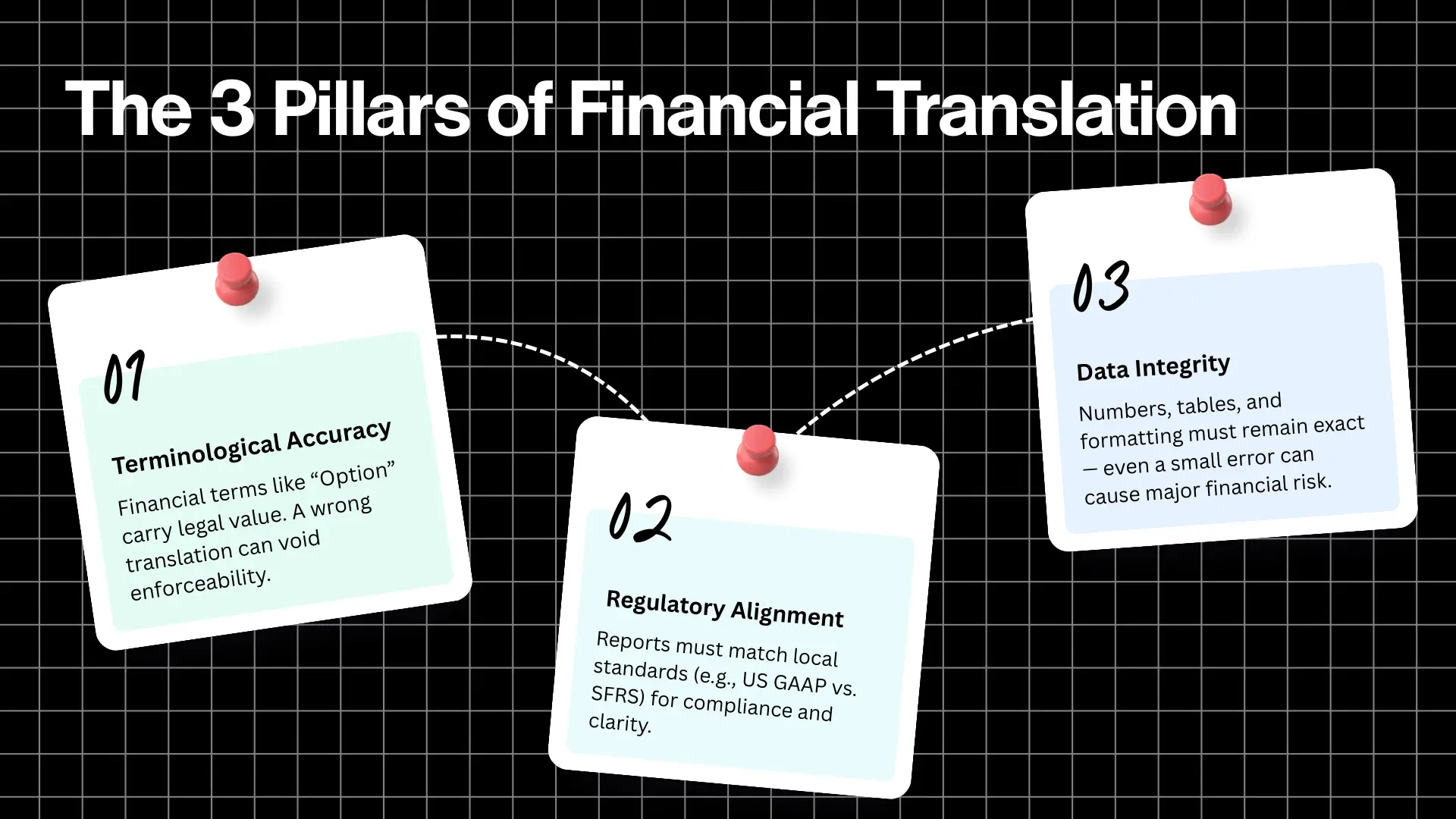
To be considered "compliance-ready" for bodies like the MAS (Monetary Authority of Singapore) or ACRA a translation service must deliver three specific outcomes:
1. Terminological Consistency:
Terminology is everything in finance. A general translator could easily misinterpret "Option" as simply "Choice." But a translator well-versed in finance understands that in the world of derivatives, an "Option" be it a Put or a Call represents a precise legal entitlement, one with inherent financial worth.Using the wrong term voids the contract's enforceability.
2. Regulatory Adaptation:
This is about making sure your documents actually mesh with local reporting rules. For instance, adapting a US 10-K for a Singaporean investor requires navigating the subtle shifts between US GAAP and SFRS (Singapore Financial Reporting Standards) It’s the only way to ensure the footnotes interpret the data accurately for the local market.
3. Data & Formatting Integrity:
Financial documents are dense with tables, balance sheets, and XBRL tags. A professional financial translation service guarantees that numerical data is never altered (e.g., ensuring a decimal point doesn't become a comma, which changes a value by orders of magnitude) and that the layout mirrors the original for easy auditing.
Who Performs Financial Translation?
This is the key differentiator. Financial translation is not performed by general linguists. It is executed by Subject Matter Experts (SMEs) linguists who often hold dual qualifications in finance (such as a CPA, CFA, or a law degree) alongside their linguistic certification.
In short, If general translation is about "communication," financial translation is about liability management.
The 2026 Regulatory Landscape: Why "Good Enough" is Now Dangerous
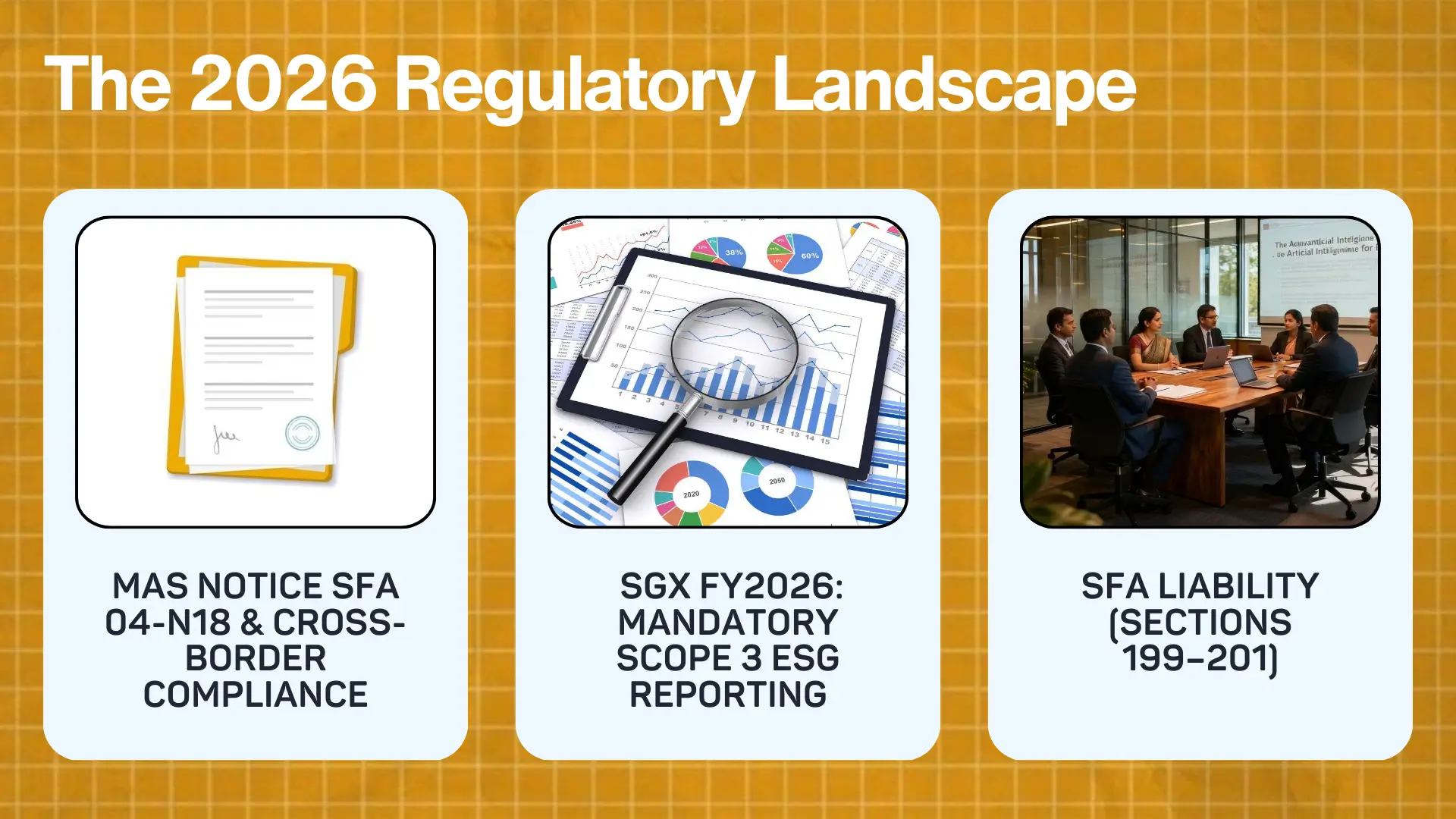
The days of relying on a generalist translator for banking documents are over. Singapore’s regulatory bodies have intensified their scrutiny of cross-border communications, effectively translating a matter of legal liability.
1. MAS Notice SFA 04-N18 & Cross-Border Compliance
The MAS has drawn a hard line on cross-border arrangements. Under MAS Notice SFA 04-N18, financial institutions dealing with overseas customers must ensure that all mandatory disclosures are not only accurate but comprehensible to the target audience.
If your Risk Disclosure Statement is translated into Vietnamese but loses the specific nuance of the risk warnings required by MAS, you aren't just facing a bad customer review. You are facing regulatory penalties for failing to provide fair and clear information. The translation must hold up in a court of law in both jurisdictions.
2. SGX FY2026: Mandatory Scope 3 ESG Reporting
FY2026 marks a massive shift for Straits Times Index (STI) constituents. The SGX now requires the disclosure of Scope 3 GHG emissions (supply chain emissions).
This involves translating raw data and reports from suppliers across Vietnam, China, and Indonesia. Precision here is non-negotiable. If your translation of IFRS S1 and S2 standards is inconsistent, your sustainability report could be flagged for "greenwashing."
- The Risk: Confusing "carbon offset" with "carbon neutral" in translation can create legal distinction errors that may lead to shareholder lawsuits.
3. SFA Liability (Sections 199–201)
Sections 199–201 of the SFA impose severe penalties for material misstatements. If a mistranslated prospectus misrepresents a material fact even unintentionally it can trigger civil penalties, regulatory stop orders, and reputational damage For directors, the burden of proof lies in demonstrating that 'due diligence' was exercised in ensuring the accuracy of all disseminated information, including translated versions.
Types of Banking Documents that Require Translation
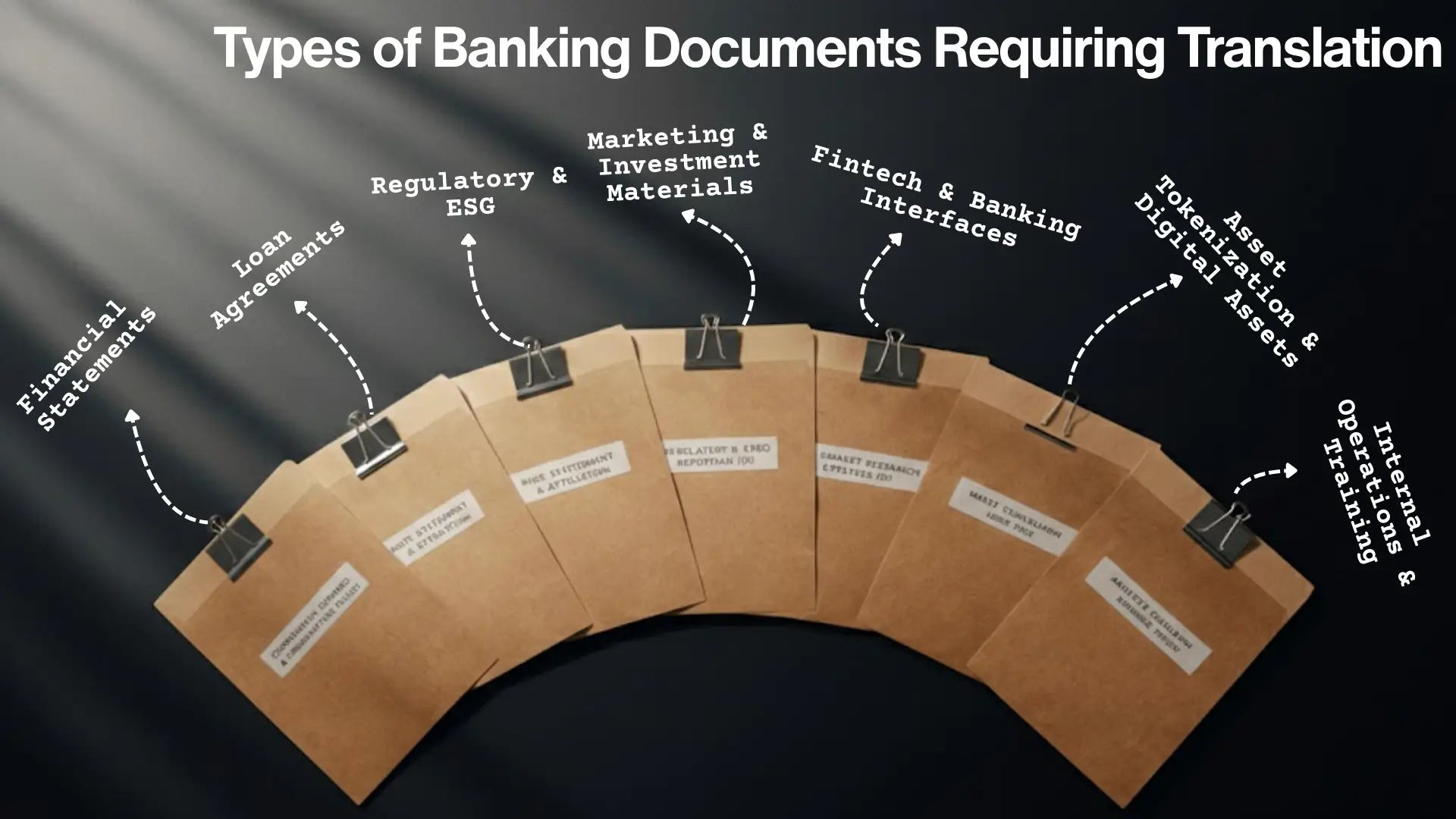
In the Singaporean financial sector, not all documents are created equal. Translating a marketing brochure requires a creative "transcreation" touch, while translating a Master Loan Agreement requires the precision of a surgical strike.
To manage your 2026 compliance budget effectively, we categorize banking documentation into four distinct Risk Tiers This allows you to apply the right level of human expertise where it matters most.
1. Financial Statements and Reports (High Risk)
These are the pillars of your corporate transparency. Precision is non-negotiable here because these documents are destined for the eyes of the ACRA and the SGX.
Key Documents are Annual reports, Auditor’s reports, Balance sheets, and Cash flow statements.
A translator must distinguish between "revenue" and "turnover" based on whether the
reporting is under SFRS (Singapore Financial Reporting
Standards) or
2. Loan Agreements and Legal Contracts (Critical Risk)
In cross-border lending, the translated version of a contract must be as legally enforceable as the English original.
Key Documents: Facility agreements, Mortgages, Guarantees, and Intercreditor agreements.
Do you know Legal terms in civil law systems like Indonesia or Vietnam don’t always have a direct match in Singapore’s common law framework. but we make sure clauses like "force majeure" or "indemnification" keep their intended legal punch even when they cross borders.
3. Regulatory Compliance & ESG Disclosures (The "2026 Standard")
This field is expanding faster than any other, fueled by much tighter oversight from the MAS and SGX.
Core Documents: AML/KYC onboarding files, Suspicious Transaction Reports (STRs), and Mandatory Scope 3 ESG Sustainability Reports.
With the 2026 climate disclosure mandate now a reality, accurately translating "carbon intensity metrics" from regional subsidiaries is paramount. Each term must be scientifically and legally sound, leaving no room for interpretation, in order to avoid the pitfalls of "greenwashing" as defined by the Securities and Futures Act.
4. Marketing and Investment Communications (Reputational Risk)
This is where "Financial SME" meets "Creative Flair."
- Key Documents: Equity research notes, Fund Factsheets (KIIDs), and Market commentary.
- Bearish trends in equity research demand more than a straightforward translation. The tone must be carefully calibrated to appeal to high-net-worth investors in North Asia or the Middle East, all while maintaining the analytical depth expected in such assessments.
5. Fintech UI, Banking Apps, and APIs (User Experience Risk)
As Singapore cements its status as a Fintech leader, the digital interface is now the primary "branch" for customers.
- Key Documents: Banking app interfaces, Payment gateway APIs, and Chatbot scripts.
- The subtlety of localization extends beyond mere translation; it's about the details, the "micro-copy." It's about making sure that a "Submit" or "Transfer" button resonates with the user's local culture, all while still presenting the necessary security warnings mandated by MAS.
6. Asset Tokenization & Digital Asset Whitepapers (Technical-Legal Hybrid)
Under Project Guardian tokenizing real-world assets (RWA) is becoming mainstream.
- Key Documents: Prospectuses for tokenized funds, Smart contract "Natural Language" summaries, and Technical whitepapers.
- The Nuance: This requires a rare hybrid expert someone who understands both Singaporean securities law and the technical mechanics of blockchain and distributed ledger technology (DLT).
7. Internal Operations & Regional Training Manuals (Operational Risk)
When Singapore serves as the regional hub, keeping everyone on the same page isn't just a goal it’s a necessity. You need a "single source of truth" that resonates across every satellite office.
- Priority Files: Compliance handbooks, HR policies, and regional cybersecurity training.
- The Reality Check: If your teams in Jakarta or Ho Chi Minh City miss the mark on the "Code of Conduct" due to a "lost in translation" moment, the Singapore HQ is still on the hook. Legally and operationally, the liability doesn't stop at the border; it stops at your desk.
- Expert Tip: Use ISO 17100 certified human translation for Categories 1, 2, 3, and 6. For Category 7 or large-scale internal data, a Premium AI + Human Review (PEMT) model can save you up to 40% on costs without compromising your firm's security.
The Buyer’s Litmus Test: How to Choose a Financial Translation Partner in Singapore
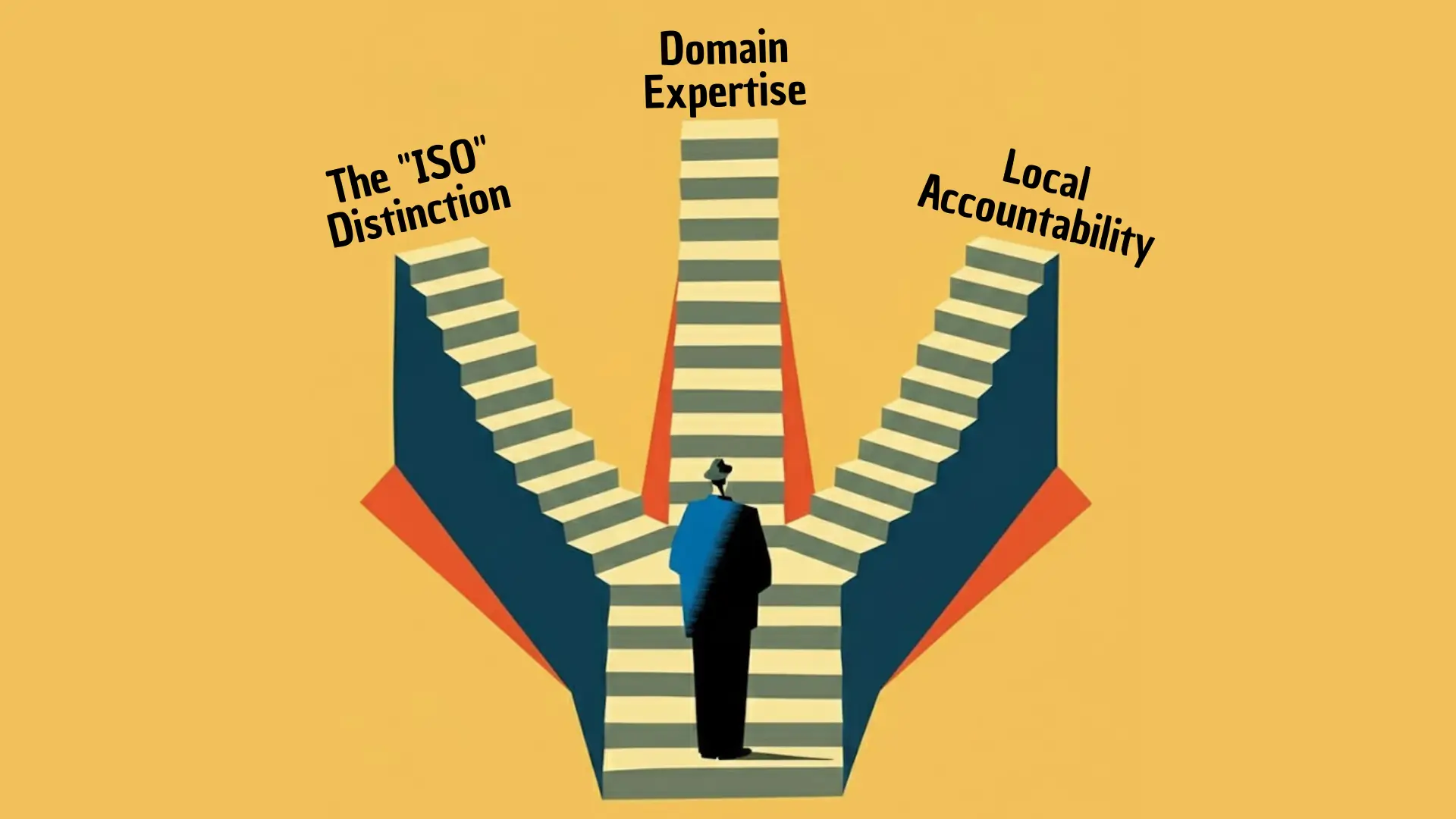
Choosing a translation partner in Singapore’s 2026 landscape requires more than a price-per-word comparison. It requires an audit of their compliance infrastructure. When vetting a provider, use this three-point checklist:
-
The "ISO" Distinction: Do not settle for a generic ISO 9001 certification. For financial services, ISO 17100 is the gold standard; it mandates a four-eye principle (translation + independent SME review). Additionally, in an era of rampant cyber-threats, ISO 27001 (Information Security Management) is no longer optional for firms handling sensitive MAS-regulated data. - Domain Expertise vs. General Linguistics: Please specify the individual responsible for managing your files. A linguist with a background in literature will struggle with the "Expected Credit Loss" models under IFRS 9. Your partner should provide "SME-led" translation where the reviewer is a former auditor, analyst, or legal counsel.
- Physical Presence & Local Accountability: While the world is digital, Singaporean law often requires physical touchpoints. If you need a document notarized for a court submission or an ACRA filing, an overseas agency will struggle with the logistics of the Singapore Academy of Law (SAL). Choose a firm with a CBD presence that can handle the "last mile" of legalization.
Future-Proofing: Fintech, Tokenization, and AI Risk
Singapore is leading the charge in Project Guardian and the move toward Real-World Asset (RWA) Tokenization This creates a new breed of documents requiring a hybrid of legal and technical fluency.
Asset Tokenization & Whitepapers
Translating the legal rights attached to a digital token requires a linguist who understands both securities law and blockchain mechanics. You are not just translating a brochure; you are translating the enforceability of a digital asset.
Embedded Finance & APIs
When a non-bank platform (like a regional ride-hailing app) offers loans, the Terms & Conditions (T&Cs) must be localized into Bahasa or Thai without losing the enforceability of the Singaporean master agreement.
The "Black Box" Liability: Generative AI Risk Management
To meet the MAS FEAT Principles, CFOs must ensure 'Accountability' in their translation workflows. Relying on raw AI to translate high-risk 'Tier 1' filings violates these principles. Our workflow ensures a 'Human-in-the-Loop' a requirement for AI-driven processes in MAS-regulated environments
Data Sovereignty: The Trap You Don't See
In the era of cloud computing, where your data is translated matters as much as how.
Under the Personal Data Protection Act (PDPA) , specifically the Transfer Limitation Obligation, financial data cannot be transferred to a country with lower protection standards than Singapore.
The Data Trap: Many "express" translation services rely on gig-economy linguists or public AI tools to save time. The catch? Your client’s sensitive net worth data could be bouncing off a server in a country that doesn't meet your privacy standards. Technically, the moment that data hits an unverified jurisdiction, you’re looking at a data breach regardless of how good the translation is.
The Solution (ISO 27001): While ISO 17100 focus on translation quality, ISO 27001 governs information security. At LetterCrafts, we utilize a closed-loop, Singapore-hosted server environment. Our linguists work within a secure portal where text cannot be copied/pasted to external engines, ensuring your data never leaves the "trusted zone."
Strategic Budgeting: The "Risk-Based" Hybrid Model
A pure human translation for every single document is no longer cost-efficient. In 2026, the smart money is on a Risk-Based Hybrid Approach We help CFOs optimize their budget by categorizing documents into tiers.
| Tier | Document Type | Methodology | Cost Efficiency |
|---|---|---|---|
| Tier 1 (Critical) | Annual Reports, IPO Prospectus, Legal Contracts, ACRA Filings | 100% Human (ISO 17100) (Translator + SME Editor) | Standard Rates |
| Tier 2 (Standard) | Internal Memos, Equity Research Notes, Training Manuals | PEMT (Premium AI + Human Expert Review) | ~30-40% Savings |
| Tier 3 (Info Only) | Big Data Sentiment Analysis, Internal Chat Logs | Raw Secure AI (Custom LLM, No public data training) | ~80-90% Savings |
Our Role: We don't just translate; we audit your content library to tell you which Tier it belongs to. You stop overpaying for Tier 3 content and stop under-protecting Tier 1 content.
Financial Translation Services Company in Singapore: Lettercrafts
In the high-stakes world of Singaporean finance, LetterCrafts has emerged as the preferred partner for CFOs and Legal Counsels for three reasons:
- We Understand the "Singapore Nuance": From the intricacies of CPF and GIRO to the specific reporting requirements of the SGX we are on the ground in Singapore. We don't just know the language; we know the ecosystem.
- Regulatory-Grade Accuracy: Our translations are more than linguistically correct they are legally defensible. Whether it’s an IPO prospectus or a MAS-mandated risk disclosure, we provide the accuracy needed to mitigate civil liability under the Securities and Futures Act.
- The Hybrid Efficiency Advantage: We recognize that not every document requires a premium price tag. Our "Risk-Based Hybrid Model" allows you to optimize your budget using 100% human expertise for Tier 1 filings while utilizing secure, reviewed AI for high-volume Tier 2 and Tier 3 content.
- Logistical Speed: Need a notarized translation for an urgent M&A closing in Raffles Place by tomorrow morning? Our CBD-adjacent team specializes in "rush" regulatory filings, handling the SAL authentication and Notary Public coordination so you don't have to.
Our Process: The LetterCrafts Compliance-First Workflow
At LetterCrafts, we don’t just "convert text"; we manage a regulatory lifecycle. Our workflow is engineered to satisfy the 2026 MAS Guidelines on AI Risk Management, ensuring every document has a clear, defensive audit trail.
We treat your data with the same security protocols as a bank. Here is exactly how your document travels from your server to ours and back again without ever leaving a secure environment.
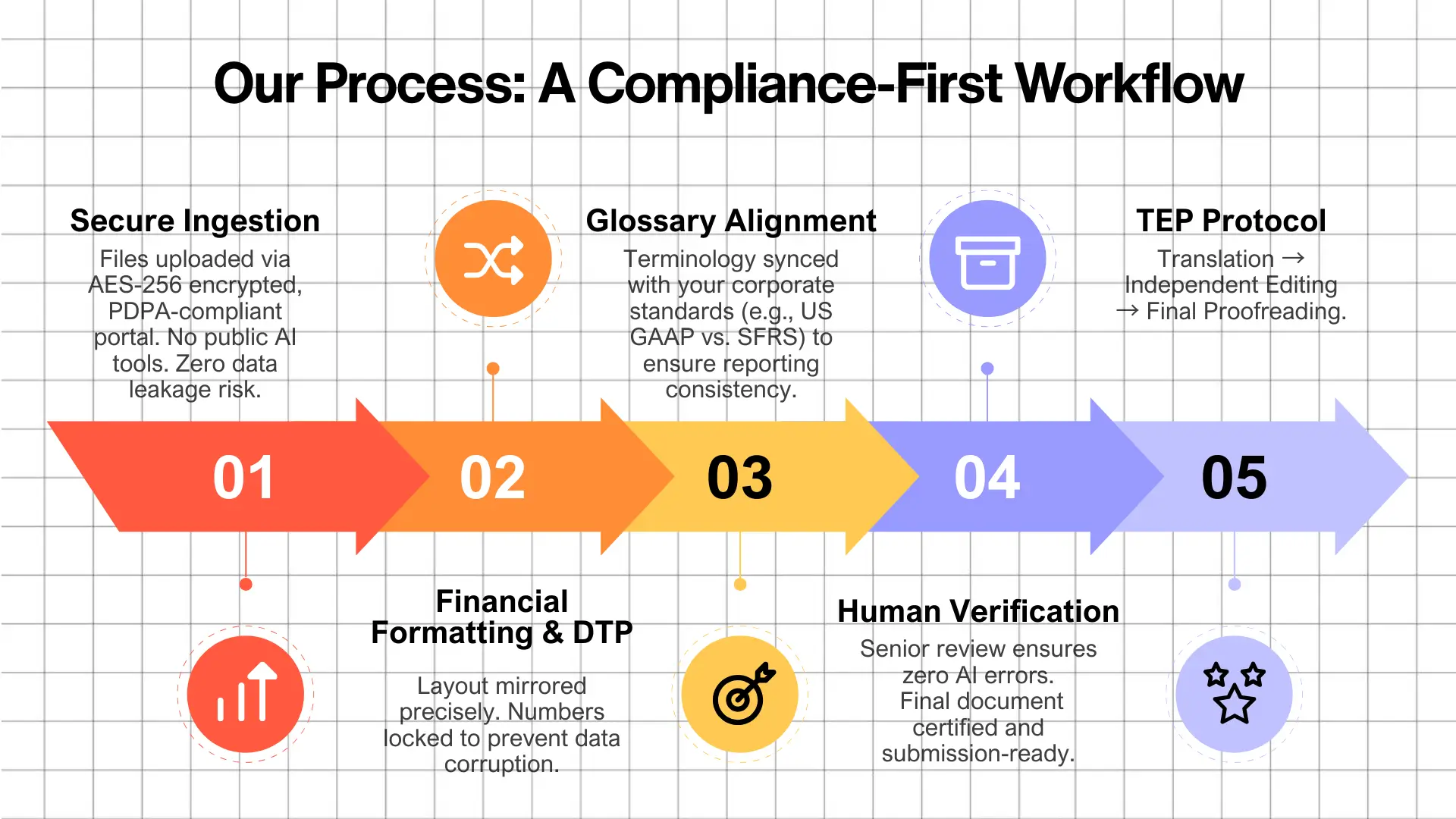
Step 1: Secure Ingestion (The Fortress)
Files are uploaded via our AES-256 encrypted, PDPA-compliant portal. We strictly prohibit the use of open-source or public AI engines (like ChatGPT or Google Translate). Your financial data remains sovereign; it is never used to train external models, eliminating the risk of a "data leak" in the public domain.
Step 2: Glossary & Style Synchronization (The DNA)
Before translation begins, our linguists sync with your firm’s Corporate Terminology Base. We define specific preferences for instance, ensuring "Revenue" isn't swapped for "Turnover" if you follow US GAAP instead of SFRS.
This approach guarantees complete consistency throughout your five-year reporting history. It also eliminates the possibility of auditors questioning any abrupt changes in terminology within your Annual Report.
Step 3: The TEP Protocol (ISO 17100 Standard)
We strictly adhere to the "Four-Eyes Principle".
- Translation: Executed by a financial linguist with expertise in the field.
- Editing: Reviewed by a distinct, independent Subject Matter Expert, such as a former compliance officer or a financial writer.
- Proofreading: A final linguistic review to ensure smoothness and correct grammar.
This is the industry gold standard. It catches nuance errors that software misses, ensuring your IPO Prospectus or Loan Agreement is legally enforceable in the target language.
Step 4: Financial Formatting & DTP (The Mirror)
Financial documents are dense with balance sheets, pivot tables, and XBRL tags. Our Desktop Publishing (DTP) team rebuilds your document so the translated version is a visual mirror image of the original.
We ensure zero numerical corruption. A decimal point shifting from 1.000 to 1,000 due to regional settings is a disaster; our DTP process locks these values to guarantee data integrity.
Step 5: Human Verification Layer (The MAS Mandate)
In strict compliance with the MAS "Human-in-the-Loop" mandate, a senior reviewer validates the final context.
This is the "Hallucination Firewall." We certify that no AI-generated errors or logical fallacies exist in the text, protecting your firm from liability under the Securities and Futures Act. You receive a Certificate of Accuracy and a document that is ready for immediate submission to the SGX, ACRA, or your legal counsel.
Conclusion
Singapore’s financial ecosystem is built on one currency: trust. In 2026, that trust is codified in stricter regulations, from the SFA to the PDPA.
When you strip away the acronyms and the technical jargon, the reality is simple. A translation error in a cross-border loan agreement isn’t just a linguistic mistake; it is a financial liability. A mistranslated ESG report isn’t just bad PR; it is a regulatory breach that can freeze your capital flows.
As we move toward an era of tokenized assets and AI-driven banking, the margin for error has vanished. You need a partner who treats your documentation with the same rigor as your legal counsel does.
At LetterCrafts, we don’t just translate words. We translate the integrity of your business, ensuring that your expansion into new markets never comes at the cost of compliance.
Don’t leave your reputation to chance or a chatbot.
[Don’t leave your reputation to chance
or a chatbot]