Executive Summary: Key Takeaways
- Legal Translation is Risk Governance: It is not a linguistic commodity but a compliance function.
- The Cost of Failure: Interpretation errors can lead to multimillion-dollar verdicts and voided contracts.
- The 5 Main Risks: Conceptual Non-Equivalence, Procurement Paradox, Terminology Drift, Procedural Non-Compliance, and Rushed Processes.
- The Solution: Implement TEP (Translation-Editing-Proofreading), Legal Back-Review, and use specialized legal linguists.
What is Legal Translation?
Legal translation is the specialized conversion of legal documents (contracts, statutes, patents) from a source language to a target language, requiring the preservation of legal nuances and effects. Unlike general translation, it relies on comparative law to ensure concepts like "Common Law" function correctly in "Civil Law" jurisdictions.
The global economy relies on legal documents, including contracts, patents, and regulatory filings, which are the non-negotiable foundations of global commerce. But here's the human element: we all know that a single, tiny mistake in a contract can lead to colossal problems, and none of us is perfect in every complex task.
When these documents cross international borders, their Legal Translation is often dangerously treated as a simple linguistic exercise, instead of the ultimate function of enterprise risk governance that it truly is. I'm not speaking theoretically; I've dedicated my time and life to solving these exact problems. This issue is of serious concern, and if you want to know everything about legal translation risk, you will find all your definitive answers in this article.
Here is what we'll cover in this guide to help you build a robust legal translation strategy:
- What is Legal Translation?
- The High Cost of Errors
- The 5 Major Legal Translation Mistakes
- The Compliance-Ready Checklist
The Ultimate Risk Gate: 5 Legal Translation Mistakes Costing Global Businesses Millions
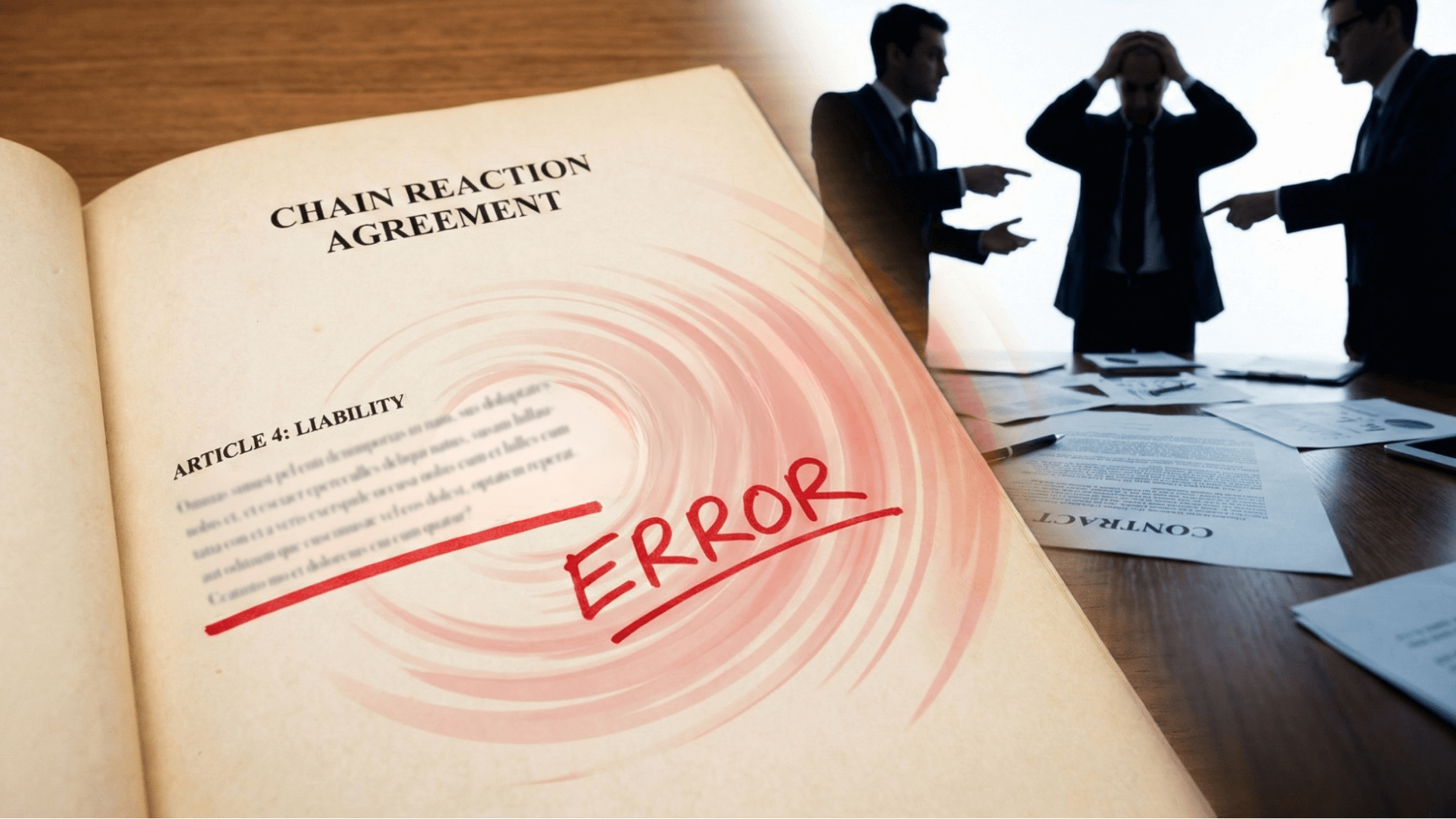
A few years ago, an $18 billion international refinery project was nearly brought to its knees, culminating in a colossal breach of contract case. The entire dispute and a potential $289 million verdict hinged on the interpretation of a single, mistranslated clause within a complex joint venture agreement.
"One mistranslated clause. Multiple interpretations. A $289 million verdict was on the line all because of a breakdown in legal translation services."
This is not an isolated anecdote. Cross-border litigation frequently hinges on the integrity of translated evidence, often involving highly sensitive information. The current corporate environment compounds this threat:
In the 2024 Thomson Reuters Institute survey, nearly 72% of corporate legal departments said they're chasing cost cuts mostly through efficiency pushes and rate discounts. On paper, that sounds smart. In practice, it's a blind spot. Anyone who's dealt with complex, cross-border disputes knows quality isn't negotiable. Shaving a few dollars off the bill might look good in a quarterly report, but it's a dangerous trade when billions are at stake.
What Is the Accountability Paradox in Legal Translation?
The Accountability Paradox in legal translation is the gap between the damage errors cause and the lack of visible consequences. In plain terms:
It happens when translation mistakes lead to lawsuits, penalties, or broken deals, but those failures seldom surface publicly. Companies quietly absorb the costs, whether financial losses or reputational hits, without filing complaints or exposing the problem. As a result, the systemic risks stay hidden, accountability is blurred, and the cycle of errors continues unchecked.
Why It Matters
- Legal translation is risk governance: It safeguards contracts, filings, and compliance across jurisdictions.
- Poor translation = enterprise risk: Lawsuits, regulatory fines, and contract invalidation are common outcomes.
- Failures stay invisible: Procurement teams often blame vendors, while organizations quietly absorb losses.
- Cycle of underestimation: Translators are scapegoated, systemic process flaws remain unaddressed, and risks compound.
Key Insight
Treating translation as a linguistic commodity rather than a compliance function perpetuates hidden liabilities. The paradox shows that accountability is misdirected, leaving corporations exposed to recurring, underestimated risks.
What are the legal translation mistakes?
The 5 Major Legal Translation Mistakes
- Conceptual Non-Equivalence (The Jurisdictional Chasm): When a legal concept in one jurisdiction lacks a genuine counterpart in another, its meaning becomes distorted, eroding clarity and undermining the integrity of the document.
- The Procurement Paradox (Undervaluing Expertise): Treating legal translation like a cheap commodity and prioritising low cost over qualified expertise creates hidden risks that surface later in litigation or compliance failures.
- Terminology Drift and Litigation Credibility: Inconsistent translation of key terms across related documents undermines credibility in court and weakens the legal argument.
- Procedural Non-Compliance (The Formatting Trap): Ignoring mandatory local rules for formatting, certification, or notarization can invalidate documents outright, regardless of the translation's accuracy.
- Rushed Processes and Late Integration: When translation is squeezed into unrealistic timelines or added too late in the process, context is lost, and quality suffers.
Mistake 1: Conceptual Non-Equivalence (The Jurisdictional Chasm)

What Is Conceptual Non‑Equivalence in Legal Translation?
Conceptual Non‑Equivalence in legal translation is the trap of translating legal terms word‑for‑word without checking whether the target jurisdiction actually recognizes the same concept.
In practice, the translated term may appear linguistically accurate yet hold a different, or even no legal significance, within the destination system.
The result: contracts, filings, or compliance documents can be fundamentally distorted, leaving them unenforceable or even void.
Why It's a Catastrophic Mistake
- Blind spot: Organizations assume translation is about language, not law.
- Comparative law gap: Common Law vs. Civil Law differences create costly mismatches.
Let’s understand this with an example. In Common Law, the term “consideration” is a cornerstone of contract validity; it’s the quid pro quo, the exchange that makes a contract enforceable. But if you translate “consideration” literally into Spanish as “consideración”, it only means “thought” or “reflection”. In a Civil Law jurisdiction, that mistranslation strips the clause of its legal force. Suddenly, what looked like a valid contract is void, unenforceable, or open to challenge.
Impact: Litigation defense costs can reach 15-25% of the disputed contract's value, amounting to millions lost.
Compliance Fix: How to Avoid Conceptual Non‑Equivalence
- Mandate a Conceptual Equivalence Memo (CEM)
- Require translation providers to document how high‑risk terms were adapted.
- Creates transparency and an audit trail for legal justification.
-
Implement Mandatory Legal Back‑Review (LBR)
- Have licensed local counsel review translated contracts or filings.
- Confirms that translated language carries the same legal weight as the original.
Together, CEM + LBR transform translation from a linguistic exercise into a compliance safeguard, ensuring every clause survives scrutiny in court.
Mistake 2: The Procurement Paradox (Undervaluing Expertise)
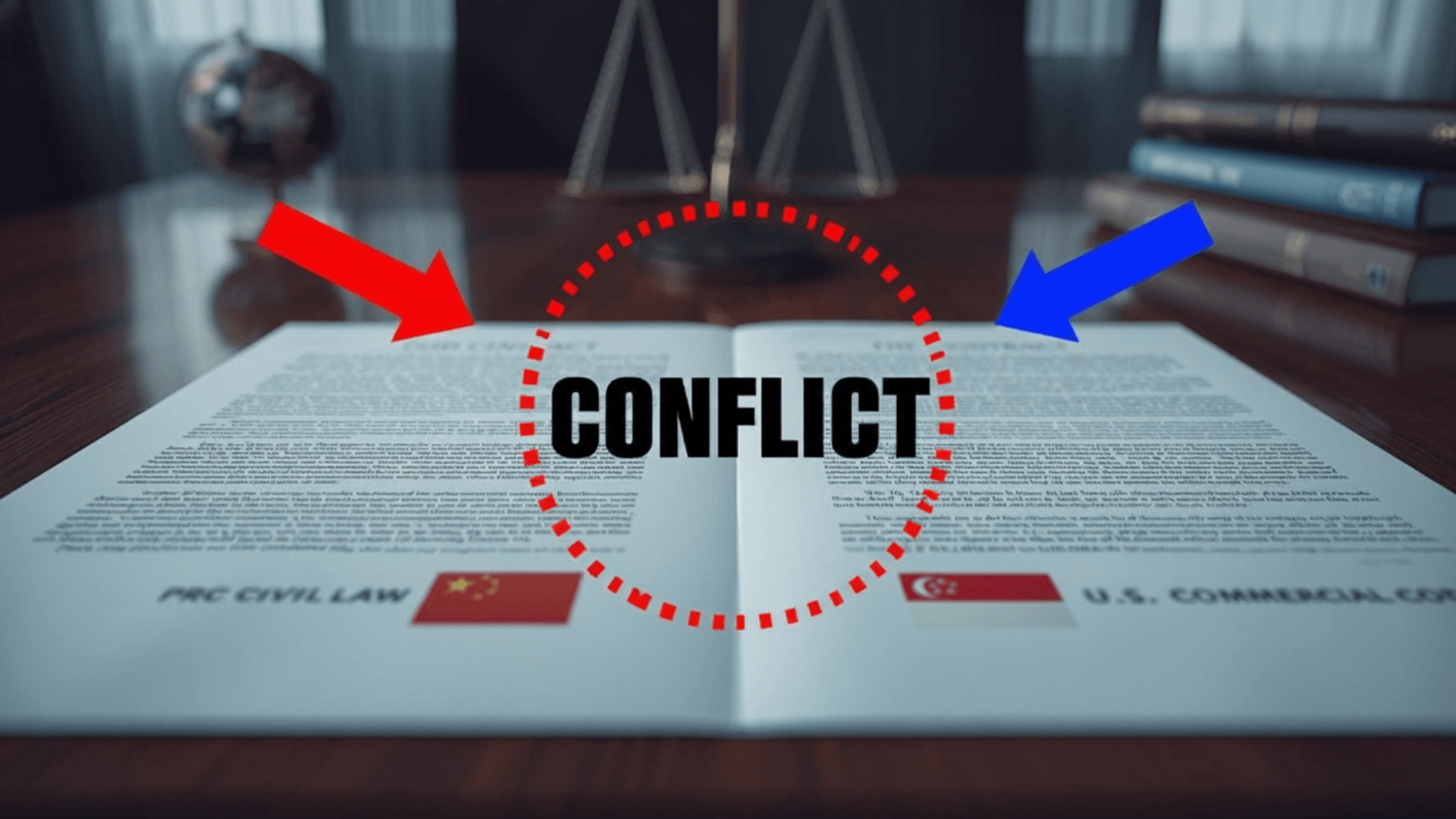
What is the Procurement Paradox in Legal Translation?
The Procurement Paradox refers to an organizational failure, often led by procurement teams, to prioritize quality, expertise, and risk mitigation when selecting translation vendors. Instead, decisions are driven by the Generalist Trap: choosing providers primarily on the lowest cost-per-word.
This approach frequently results in the engagement of linguists without essential Subject Matter Expertise (SME) or required legal credentials (such as Certified Legal Translation), ultimately compromising accuracy and compliance.
Why do businesses commonly fall into this trap?
This mistake keeps happening because corporate procurement teams are measured on the wrong metrics. The focus is almost always on unit cost savings, how many dollars they can shave off per word, instead of whether the translation process meets essential quality gates like specialized Translation - Editing - Proofreading (TEP) or proven legal expertise.
Legal teams often make the problem worse. Instead of insisting on subject-matter specialists, they lean on generalist agencies or, in some cases, assume that internal bilingual staff can handle the work. The reality? Fluency in two languages doesn’t equal legal training. The result is a document that looks fine on the surface but fails when tested in court or under regulatory scrutiny.
Real-World Example: The "Terminator" Clause
Take the so‑called “Terminator” clause. In one high‑profile tech lawsuit, everything hinged on that single word. The clause was meant to signal the end of a party’s rights or obligations. But the company had hired a low‑cost translator who took the word literally, like a movie reference, without grasping its precise legal meaning. That slip turned into years of litigation and millions in losses. It’s a stark reminder: fluency alone isn’t enough. In legal translation, context and expertise are non‑negotiable.
- Impact: The result of this paradox is increased litigation defense costs, potential loss of intellectual property rights (IP), and the creation of legally vulnerable documents
The Compliance Fix: How to Avoid the Procurement Paradox
- Implement a Risk‑Weighted Scoring Model for RFPs: When it comes to translation RFPs, expertise should outweigh price. Build a scoring model that gives heavier points to vendors with proven legal credentials, such as sworn translator status, five or more years in M&A or IP, or direct experience in the jurisdiction at hand. Cost‑per‑word matters, but it should never be the deciding factor.
- Mandate Credentials: For high‑stakes projects, don’t leave qualifications to chance. Require documented proof of legal credentials for both the translator and the editor assigned. This ensures you’re not just hiring language skills, you’re hiring legal expertise.
- Specify the TEP Process: Spell out a clear Translation‑Editing‑Proofreading (TEP) workflow. And make it non‑negotiable that a legally trained editor and proofreader are part of the process. Relying on a single generalist linguist is a shortcut that can cost millions when the stakes are high.
Mistake 3: Terminology Drift and Litigation Credibility

What is Terminology Drift in Legal Translation?
Terminology Drift is the failure to maintain a consistent translation for key legal concepts or defined terms across a series of related legal documents (e.g., contracts, amendments, exhibits, and court filings). This means translating a single source term like "termination notice" inconsistently as "notice of cancellation", "notice of end of agreement", or "severance document" in the target language across different batches or translators.
The Compliance Fix: How to Prevent Terminology Drift
Terminology Drift is catastrophic because inconsistent translations of key legal terms create ambiguity that undermines contract validity, litigation credibility, and compliance.
Key Risks:
- Project management failure: Lack of a centralized Legal Termbase or Translation Memory (TM) leads to drift.
- Weaponized ambiguity: Opposing counsel can exploit inconsistencies to challenge intent and credibility.
- Real-world example: In a $289 million verdict case, a single clause mistranslated across multiple documents gave the opposing side grounds to argue parties never agreed on the meaning.
- Financial impact: Defense costs can rise 10–30% of the disputed contract value, forcing counsel to spend enormous time clarifying intent and defending accuracy.
Bottom Line:
Terminology Drift isn't a harmless linguistic slip; it's a systemic compliance failure. Without disciplined project management, organizations risk multimillion-dollar litigation costs and contracts being undermined in court.
Mistake 4: Procedural Non-Compliance (The Formatting Trap)

What is Procedural Non-Compliance in Legal Translation?
Procedural Non-Compliance means overlooking jurisdiction-specific mandatory requirements for the final translated document's structure, formatting, layout preservation, official seals, or mandatory certified translator statements. This is the Formatting Trap: a translated document can be 100% linguistically accurate yet still be rejected by a court or regulatory body if it fails to meet local procedural rules.
Why do businesses commonly make this mistake?
Quality Assurance in translation often gets reduced to a single dimension: checking whether the words are correct. But in legal contexts, accuracy isn’t just about language; it’s about structure, format, and compliance with jurisdiction-specific rules. And this is where many legal teams drop the ball. By failing to provide vendors with clear standards, things like line-by-line fidelity, margin requirements, or mandatory headers and footers, they set the stage for costly procedural failures.
As one judge once remarked: “A court might reject a contract translation, even if the language is flawless, 'if it lacks the certified translator's official statement or required seals'. The local rules are a formatting trap.”
Real-World Example: The Missing Seal
In Civil Law jurisdictions, a contract or court filing translation isn't legally admissible without the official seal or sworn statement of a government-appointed translator. I've seen cases where a contract was translated perfectly in terms of language, but rejected outright because it lacked the certified translator's statement or failed to replicate the original layout, for example, not placing the translation side-by-side with the source text as required. The result? Proceedings halted immediately.
Impact:
The consequences are severe. A missing seal or formatting error doesn't just delay a filing; it can trigger immediate court penalties and stall proceedings. In major commercial hubs like London, New York, or Frankfurt, those delays can cost anywhere from $50,000 to $500,000 per week. That's not just a technicality; it's a financial and reputational disaster born from neglecting structural QA.
The Compliance Fix: How to Avoid the Formatting Trap
The good news is that formatting traps can be avoided, but only if translation is treated as a compliance function, not just a linguistic one. Here are three practical safeguards every legal team should build into their process:
- Create a Certification Requirements Matrix (CRM): Before you even engage a vendor, map out the rules. Build a matrix that clearly aligns each target jurisdiction with its certification requirements, whether sworn, notarized, or apostilled, along with formatting mandates like line-by-line fidelity or mandatory headers. This becomes your playbook, ensuring no one is guessing what's required at the eleventh hour.
- Enforce Final Visual Verification: Don't stop at checking the words. Make visual verification a mandatory step in QA. A compliance officer should review the finished translation against a format checklist to confirm layout preservation and the inclusion of all official statements, seals, and certifications. This step catches the small but devastating errors that can derail admissibility.
- Specify Official Certification: Finally, lock it into the contract. Require vendors to use officially certified or sworn translators whenever the jurisdiction mandates it. This removes ambiguity and ensures that every filing meets the procedural bar for admissibility.
By embedding these safeguards, you transform translation from a risk of formatting into a compliance asset. Instead of scrambling to fix rejected filings, your team can file with confidence, knowing every seal, statement, and layout requirement has been met.
Mistake 5: Rushed Processes and Late Integration

What are Rushed Processes and Late Integration in Legal Translation?
This mistake means commissioning translation only at the final stage, often when statutory or court deadlines are imminent. This creates an immediate risk because the compressed timeline forces the waiver of critical TEP (Translation, Editing, Proofreading) and LBR (Legal Back-Review) quality gates, which are necessary to catch the prior four systemic errors.
Why do businesses commonly make this mistake?
At its core, it’s a project management failure inside the legal department. Too often, counsel holds onto documents until the very last minute, waiting for final internal approvals before releasing them for translation. By the time the files are handed over, the clock has already run out.
Such delays manufacture an artificial crisis. Forcing translation vendors into ‘rush’ mode, paid extra to cut corners and bypass essential quality checks, all just to meet unrealistic deadlines. What looks like efficiency in the short term is actually a high-risk gamble with compliance and credibility.
According to me, “It is better to keep clients waiting a few days than to give them an unreliable answer that won’t stand up to a challenge in court. The cost of a few days’ delay is nothing compared to the cost of a mistranslated decimal point.”
The lesson is clear: translation isn’t the last checkbox in the process. It’s an important part of risk governance. Treating it as an afterthought doesn’t just waste money, but it can undermine the very foundation of your case or contract.
Real-World Example: The Decimal Point Disaster
The most dangerous mistakes are often the smallest ones. In rushed translation projects, it’s not the big, obvious errors that cause the most damage; it’s the tiny details that slip through when quality checks are skipped.
Take the infamous Decimal Point Disaster. In financial contracts, a misplaced decimal can completely change the meaning of a clause. Different jurisdictions use commas and periods differently, so what should read as $1,000.50 (one thousand dollars and fifty cents) could end up as $1.000,50 (one thousand dollars and fifty cents) or even $1,000.500 (one million fifty thousand).
That single mistranslation doesn’t just look sloppy; it alters the actual financial obligation. Suddenly, the contract says something entirely different, and the opposing side has all the ammunition they need to challenge it in court.
The impact is brutal. Rushed processes don’t just introduce one error; they multiply risk. A skipped proofreading step can lead to altered sums owed, successful contract challenges, financial penalties, and a cascading effect where all the other common mistakes terminology drift, conceptual non-equivalence, and procurement shortcuts, creep into the final, critical document.
The Compliance Fix: How to Manage Translation Timelines
The fix isn’t complicated, but it does require discipline. Translation has to be treated as part of the project plan, not as an afterthought.
- Adopt a Rolling Translation Schedule. For large-scale projects like e-Discovery or complex regulatory filings, don’t wait until the entire document set is complete. Start translating in batches as soon as each section is finalized. This rolling schedule keeps the workload manageable, reduces the need for “rush” services, and ensures quality checks aren’t sacrificed under deadline pressure.
- Require C-Level Legal Sign-Off for Rush Requests. If a translation request comes in under a 48-hour deadline, make it policy that only C-level Legal or General Counsel can approve it. This forces internal teams to acknowledge the risks and costs of waiving quality controls. It's a way of saying: if we're going to cut corners, leadership must own that decision.
- Build Translation into the Project Scope. Translation isn’t a side task; it’s a core phase of legal project management. Allocate time and budget for it upfront, just like you would for discovery, filings, or hearings. When translation is scoped properly, you avoid last-minute crises and protect the integrity of your documents.
A Final Warning: Hidden Compliance Risks in the Digital Age

Beyond the five structural mistakes we’ve already covered, global legal teams face two bigger compliance risks that can accelerate failure in today’s digital environment: admissibility of evidence and the liability gap introduced by technology.
- Multilingual Evidence Admissibility: Free, general-purpose machine translation tools, whether Google Translate, ChatGPT, or similar platforms, look harmless at first glance. They're fast, convenient, and cost nothing. But for legal teams, they're a hidden minefield. The risks don't show up until it's too late.
- Data Security and Confidentiality Failures: Feeding sensitive legal material into non‑compliant MT platforms without NDAs or secure architecture isn’t just risky; it can breach professional duties outright.
- Loss of Privilege: When attorney‑client communications are run through public MT tools, courts can interpret that as waiving privilege. Suddenly, a confidential strategy is exposed.
And this isn’t just theory. In 2023, a major U.S. state issued a legal ethics advisory warning that using general-purpose, non-secure MT tools for confidential legal documents could violate the duty of competence and confidentiality.
Why This Matters
These risks show that translation isn't just about language; it's about compliance, governance, and protecting the integrity of your case. A mistranslated clause can void a contract, but a mistranslated process can void your evidence or compromise privilege. Both are catastrophic, and both are preventable with the right safeguards.
The Compliance-Ready Legal Translation Checklist for Businesses
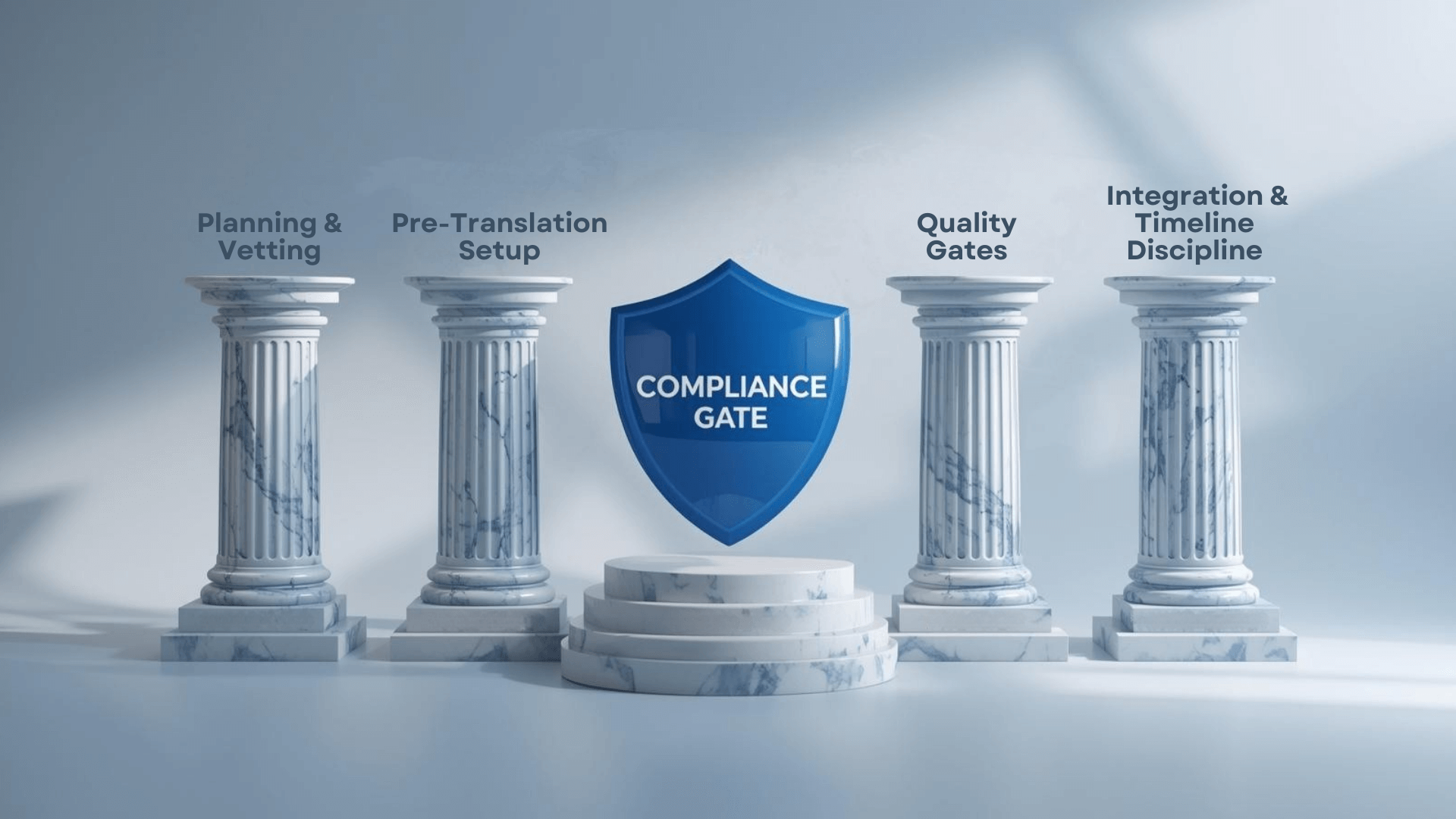
By adopting these four pillars, your organization can move past treating translation as a commodity and manage it as what it truly is: the ultimate risk gate for global business.
-
Planning & Vetting (Mitigating Procurement Risk)
- Secure C-Level approval for a risk-weighted vendor selection model.
- Contractually mandate the Translation - Editing - Proofreading (TEP) process.
- Require proven legal specialization (e.g., M&A, IP expertise).
-
Pre-Translation Setup (Ensuring Consistency & Compliance)
- Have legal counsel approve a preliminary legal termbase (50-100 key terms).
- Provide a Certification Requirements Matrix (CRM) mapping jurisdictional rules.
-
Quality Gates (Validating Legal Effect)
- Require vendors to submit a Conceptual Equivalence Memo (CEM) for high-risk terms.
- Mandate a Final Legal Back-Review (LBR) by licensed local counsel.
-
Integration & Timeline Discipline (Preventing Rushed Errors)
- Adopt a rolling translation schedule for large projects.
- Require C-Level sign-off for rush requests under 48 hours.
- Build translation into the project scope from the start.
Legal translation is where your global ambition meets legal reality. By integrating this compliance checklist into your standard operating procedures, you stop risking millions and start building a resilient, globally compliant legal framework.
Navigating the Compliance Challenge: How a Specialized Partner Executes the Framework
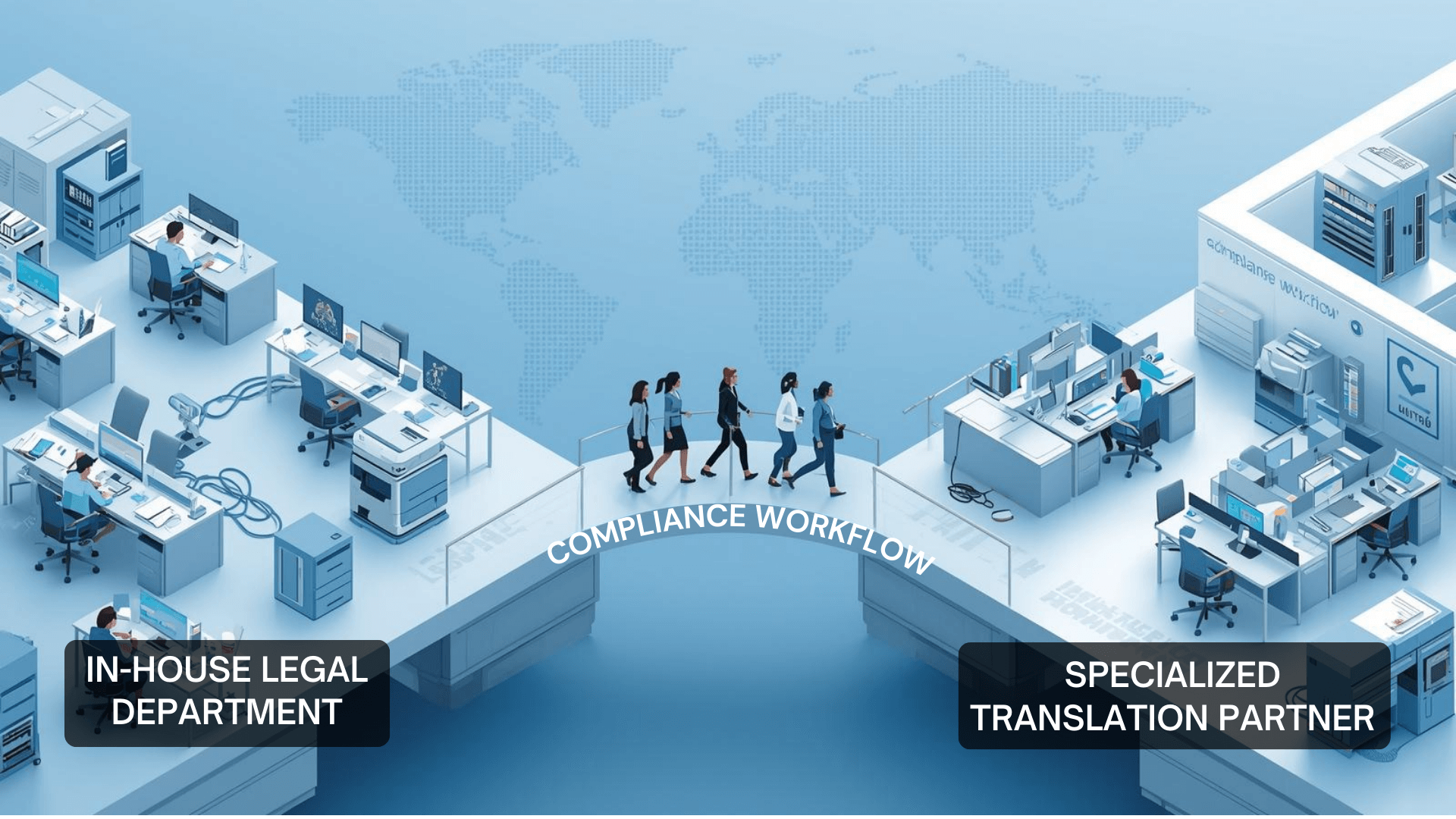
Specialized expertise: In-house legal teams rarely have the bandwidth or resources to manage complex translation compliance. A partner structured for this work makes the difference between risk exposure and an ironclad defense.
LetterCrafts advantage: Unlike generalist agencies, we’re built to enforce compliance pillars, directly turning translation from liability into a strategic asset.
Four Pillars of Compliance Execution
-
Eliminating the Procurement Paradox:
- We reject “lowest price-per-word” shortcuts that create risk.
- Native legal linguists in 80+ languages ensure precision.
- Guarantee Conceptual Equivalence documents achieve the same legal effect across jurisdictions.
-
Consistency & Quality Assurance:
- Rigorous workflow: Translation → Editing → Proofreading → Review.
- CAT tools (Trados, Smartcat) maintain a centralized Legal Termbase.
- Every term is consistent, strengthening credibility and protecting contractual intent.
-
Procedural Compliance & Admissibility:
- Certified translations accepted by ICA, MOM, LTA, and embassies.
- We manage notary authentication, affidavits, and court appearances.
- Ensures documents aren’t rejected on technical grounds, fully admissible, and defensible.
-
Confidentiality & Data Integrity:
- No risky machine translation tools, strict NDAs protect sensitive content.
- Compliance with Singapore Data Protection Act and disciplined retention policies.
- Safeguards attorney-client privilege and shields against data breaches.
LetterCrafts translation isn’t just accurate, it’s compliant, defensible, and secure.
Conclusion: From Cost Centre to Strategic Asset

At LetterCrafts, we’ve seen firsthand that the most catastrophic legal translation failures from Conceptual Non‑Equivalence to Procedural Non‑Compliance are not just linguistic mistakes. They are process failures rooted in flawed procurement, weak internal controls, and rushed timelines. This distinction matters: it shifts translation from reactive damage control to proactive risk governance.
Our Strategic Recommendation: Enforce Process Over Price
Legal translation cannot be treated as a commodity or a cost center to be cut. It must be treated as an insurance premium against litigation risk. A structured Translation - Editing - Proofreading (TEP) process costs far less than:
- A $289 million verdict from a mistranslated clause.
- $500,000 per week losses from stalled proceedings in London, New York, or Frankfurt.
Why Partner with LetterCrafts
The time to stop treating translation as a commodity is now. To ensure your global operations meet the rigor of the Compliance-Ready Checklist, partner with LetterCrafts. We enforce these standards, transforming translation from a hidden liability into a strategic compliance asset.
Contact us today to secure a consultation on how our specialized legal translation process and compliance framework can:
- Protect your most sensitive cross‑border documents.
- Eliminate overlooked risks.
- Safeguard your contracts, filings, and evidence in every jurisdiction.